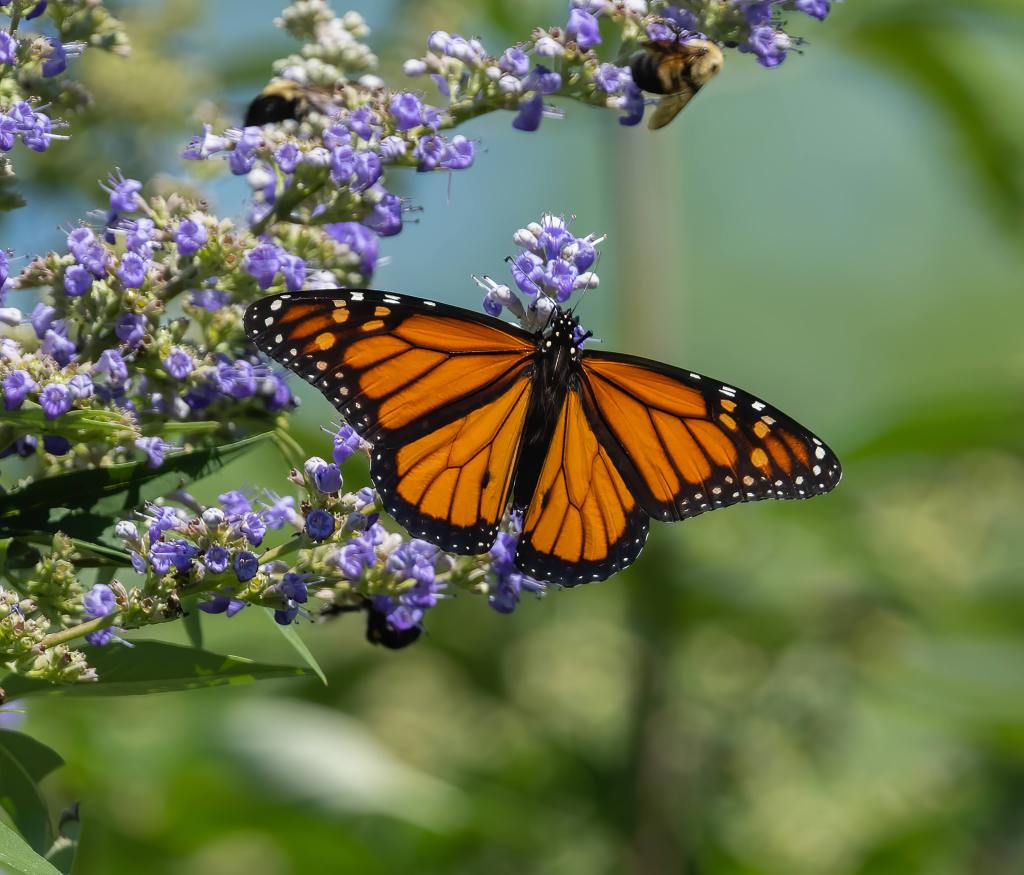
Invertebrates, animals that lack a vertebral column (or backbone), dominate the world. They make up more than 95% of all living animal species. In a given ecosystem, they may compose more than 90% of the living biomass. Invertebrates play crucial ecological roles through their diverse interactions with other organisms. They serve as decomposers, pollinators, parasites, and predators. More than 85% of the world’s plants, including two-thirds of our food crops, require animal pollinators, mostly invertebrates. Invertebrates aerate and create soil. Seed-eaters, such as harvester ants, aid in plant dispersal. Invertebrates are key elements in food chains that support birds, fish, and many other vertebrate species. Nearly all bird species (96%) feed on invertebrates at some point in their life. (One swallow chick can consume two million insects before it fledges!) Many invertebrates eat plants, but they also prey on pests that eat plants; one-quarter of all insect species are parasites or predators of other insects. Without their presence, ecosystems would crash. In fact, E.O. Wilson, the renowned late Harvard entomologist, once said that invertebrates are “the little things that run the world.”
Invertebrates also provide direct benefits to people. Many cultures depend on invertebrates as a major source of protein. Horseshoe crabs are used for testing bacterial contamination in medical devices and vaccines. Spiders produce silk that is used in industrial applications, such as bulletproof vests and surgical sutures. Invertebrate communities are used as crime scene evidence in forensic investigations. Some insects spread human disease, but other insects help keep vector insect populations in balance.
E.O. Wilson was right–we need invertebrates!
Subscribe to get access
Get access to the rest of this chapter and the entire contents of Texas Wildlife Science for a one-time subscription fee.
 Texas Wildlife Science
Leave a comment