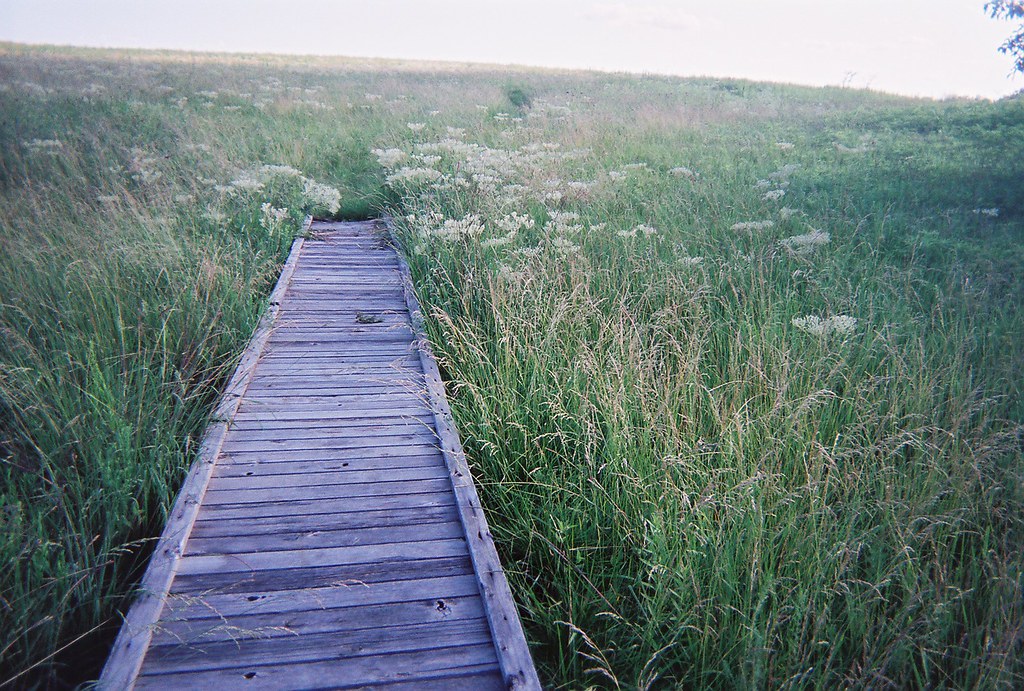
Texas was once mostly grassland—miles and miles and miles of grassland! Explorers reported that grasses in the original tallgrass prairie of North America were up to nine feet high. German immigrants heading west from Houston in the 1830s marveled at the colorful plains, perhaps in spring after a recent burn, stretching to the horizon, “With scarcely a square foot of green to be seen, the most variegated carpet of flowers I have ever beheld lay unrolled before me…red, yellow, violet, blue, every color, every tint was there.” Still, not everyone was impressed with the damp coastal prairie. Another old account reported, “Hardly had we left Houston when the flat prairie loomed up as an endless swamp…darkness fell and we had not reached the end, nor did we find a dry place to lie down [nor] a stick of wood to kindle a fire” (Trust for Public Land, “A Prairie Called Katy”).
Farther west in the Cross Timbers and Rolling Plains, the grasses were not as tall—only “stirrup-high” or “high as a horse’s belly”—but they still dominated the landscape. In the Texas Panhandle, Francisco Vásquez de Coronado, searching for the fabled City of Gold, spent days crossing an endless flat plain full of shaggy “cows” (bison), a landscape that later explorers described as “the great Zahara [Sahara] of North America.”
What has happened to these vast, beautiful prairies that once swept across a landscape occasionally broken by woods or rivers? It is a story of appreciation, abuse, rediscovery, and restoration that is still ongoing today.
Subscribe to get access
Get access to the rest of this chapter and the entire contents of Texas Wildlife Science for a one-time subscription fee.
 Texas Wildlife Science
Leave a comment