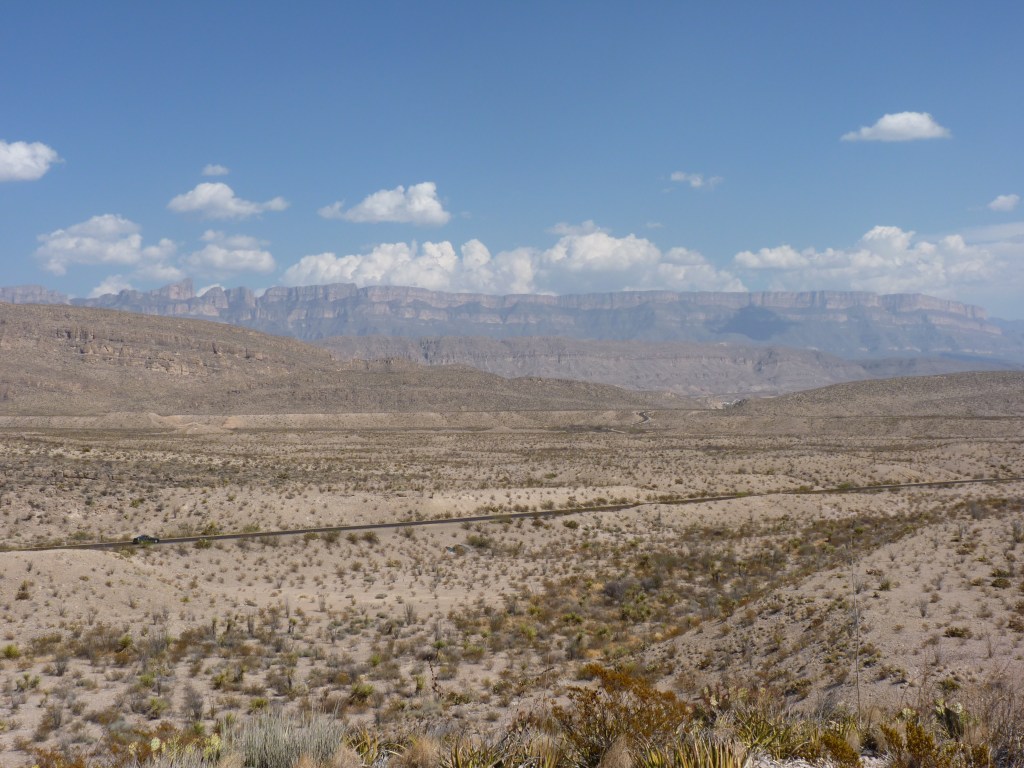
Early Europeans exploring the deserts of Texas had mixed feelings. The Center for Big Bend Studies shares notes from Lt. Edward L. Hartz, who explored the region as part of the U.S. Army Camel Corps (yes, the Army rode camels in Texas!). He said, “A rougher, more rocky, more mountainous, and rugged country, can scarcely be imagined.” The Belgian explorer Jules Leclercq declared that “each plant in this land is a porcupine, it is nature armed to the teeth.” And yet, these same explorers and others marveled over the magnificence of the landscape.
Still today, Texas’ roughest ecoregion is many people’s favorite. It is a vast, rugged landscape where mountain islands arise out of desert seas, columns of igneous basalt and ice-cold spring waters burst forth from broken terrains, dull tan desert vegetation explodes with color in late summer, riparian woodlands teem with birds, bears wander the mountains, and reptiles roam the nights. It is harsh; it is untamed; it is lonely and challenging. Welcome to Big Bend Country. Welcome to the Trans-Pecos!
Subscribe to get access
Get access to the rest of this chapter and the entire contents of Texas Wildlife Science for a one-time subscription fee.
 Texas Wildlife Science
Leave a comment